

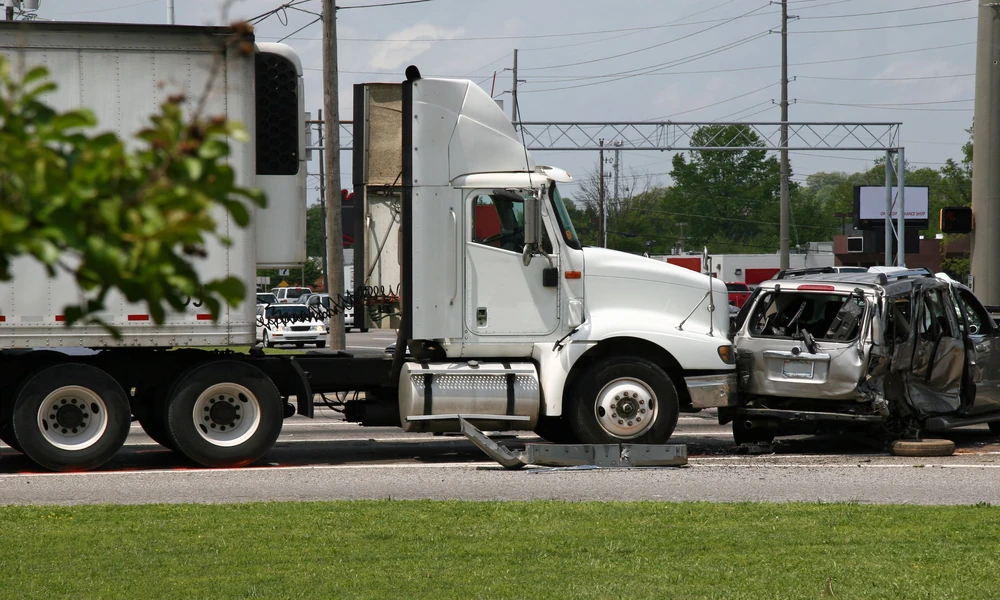
A crash with a tractor-trailer is rarely just the driver’s fault. Several businesses stand behind every commercial truck on the road, and both Florida and federal law can reach them. Sorting out who is responsible is one of the first steps in any serious truck case.
More than one party can be responsible
Depending on what caused the crash, liability can extend to several parties:
- The driver, for speeding, fatigue, distraction, or other negligent driving.
- The trucking company, the carrier that employed the driver and set the schedule.
- The truck or trailer owner, a separate company that owns the equipment.
- A maintenance or repair company, for brake, tire, or other failures it should have caught.
- The cargo loader, for an overloaded or improperly secured load.
- A parts manufacturer, if a defective component helped cause the crash.
Each may carry its own insurance, which is why identifying every party matters.
What are the most common causes of truck accidents?
Many truck crashes trace back to pressures and shortcuts in the industry. Common causes include:
- Driver fatigue, often tied to hours-of-service violations
- Speeding, which lengthens a loaded truck’s stopping distance
- Distracted or impaired driving
- Improper or overweight loading that causes a rollover or jackknife
- Poor maintenance, such as worn brakes or bald tires
- Blind spots and unsafe lane changes
Each cause tends to point toward a different responsible party, which is why a careful investigation matters.
Vicarious liability and the dangerous instrumentality doctrine
Under the legal rule of respondeat superior, an employer is responsible for the negligence of an employee acting within the scope of the job, so a trucking company is generally liable alongside its driver. Florida adds another layer through the dangerous instrumentality doctrine, which can hold the owner of a vehicle responsible for the negligence of anyone driving it with permission. That doctrine can reach truck and trailer owners who were nowhere near the crash.
Federal safety rules
Commercial trucks are governed by the Federal Motor Carrier Safety Administration. The hours-of-service rules in 49 C.F.R. Part 395 limit most drivers to 11 hours of driving within a 14-hour window, require a 30-minute break after eight hours, and cap weekly hours. When a company pushes a driver past those limits and a fatigued driver causes a crash, the violation can be strong evidence of negligence.
Why are truck accidents so severe?
The physics explain the damage. A fully loaded tractor-trailer can weigh up to 80,000 pounds, while a typical passenger car weighs around 4,000. In a collision, that mismatch sends enormous force into the smaller vehicle, which is why truck crashes so often cause catastrophic injuries or death. The severity also raises the financial stakes, because the medical costs and long-term losses can be substantial.
What evidence matters in a truck accident claim?
Truck cases turn on records that an ordinary car wreck never involves. The most important evidence usually includes:
- Electronic logging device data showing the driver’s hours
- The truck’s onboard computer, or engine control module
- The driver qualification and training file
- Drug and alcohol test results required after many crashes
- Maintenance and inspection records
- Bills of lading and weight tickets
Because much of this evidence belongs to the trucking company, securing it early is critical.
How comparative negligence affects a truck accident claim
Florida uses modified comparative negligence under Florida Statute § 768.81. An injured person’s recovery is reduced by their share of fault, and a person found more than 50% at fault recovers nothing. With several possible defendants, fault can be divided among them, so an investigation that accurately places blame on the driver and carrier directly protects the injured person’s recovery.
Why evidence disappears fast
Much of the proof in a truck case, including electronic logging data, the truck’s onboard computer, and maintenance records, belongs to the trucking company, and some of it can be overwritten within months. As David W. Lipcon, Esq., a founding partner at the Miami firm Lipcon & Lipcon, P.A., points out, a prompt letter demanding that the company preserve everything is often the most important early step. Liability in a Florida truck accident can reach several parties at once, which is why that early investigation matters so much.
What should you do after a truck accident?
The steps taken in the hours after a truck crash protect both health and any future claim. If you are able, call 911 so police and paramedics respond and a crash report is started, get medical care even for injuries that seem minor, and photograph the vehicles, the scene, and the truck’s company name and U.S. DOT number. Collect the names of any witnesses, and be careful about giving the trucking company’s insurer a recorded statement before getting advice.
What injuries do truck accidents cause?
Because of the force involved, truck crash injuries are often life-changing. They commonly include traumatic brain injuries, spinal cord injuries and paralysis, multiple or crushed bones, internal organ damage, and severe burns. Injuries this serious frequently require surgery, long rehabilitation, and ongoing care, which is why these claims often involve future medical needs rather than only current bills.
What damages can you recover in a truck accident claim?
When liability is established, an injured person can recover for the losses the crash caused, including past and future medical expenses, lost wages and reduced earning capacity, pain and suffering, and the cost of long-term care. In a fatal crash, surviving family members may bring a wrongful death claim for their own losses. Because truck injuries tend to be severe, these claims frequently account for care that will be needed for years.
How soon should you act after a truck crash?
Quickly. Trucking companies and their insurers often send a rapid-response team to the scene within hours to gather their own evidence. Some records can be lawfully overwritten or discarded within months, and a truck can be repaired or sold before it is inspected. Getting a preservation letter out early is what keeps the key evidence from disappearing.
Frequently asked questions
Who is liable in a truck accident besides the driver?
Besides the driver, parties that can be liable in a truck accident include the trucking company, the truck or trailer owner, a maintenance company, the cargo loader, and a parts manufacturer.
Can you sue a trucking company for a driver’s accident?
Yes. Under the legal rule of respondeat superior, a trucking company can be held liable for a crash caused by its employee driver acting within the scope of the job.
What are the federal hours-of-service limits for truck drivers?
Under 49 C.F.R. Part 395, most truck drivers may drive up to 11 hours within a 14-hour window, must take a 30-minute break after eight hours, and face weekly driving caps.
How long do you have to file a truck accident claim in Florida?
In Florida, a truck accident claim generally must be filed within two years of the crash for accidents on or after March 24, 2023, under Florida Statute § 95.11(4)(a).
What evidence is important after a truck accident?
Key evidence after a truck accident includes the driver’s electronic logging data, the truck’s onboard computer, maintenance records, drug and alcohol test results, and the driver qualification file.
